
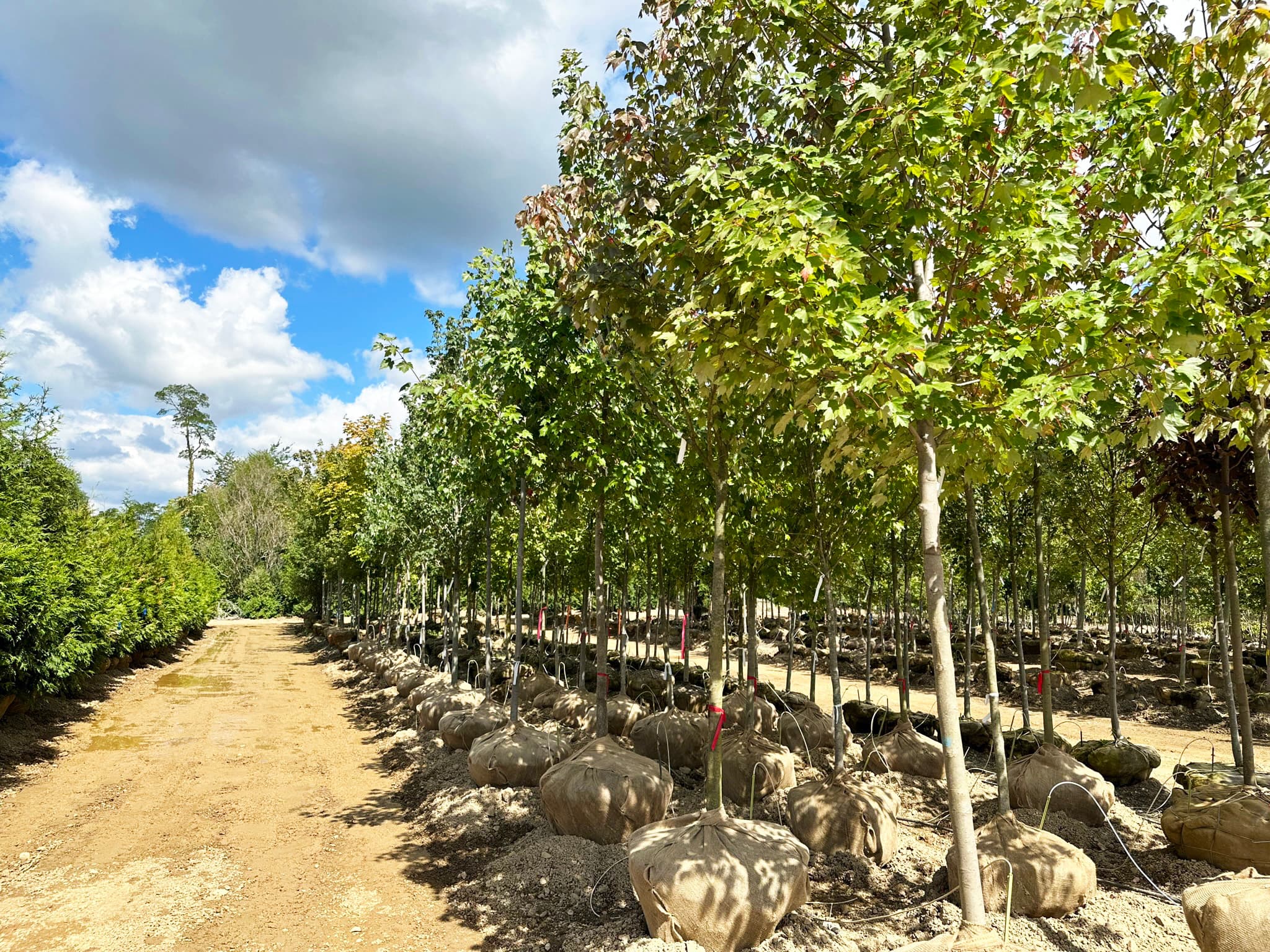
Six steps from the truck to the first watering
Planting too deep and a dry first summer are the two mistakes this sheet is built to prevent. It covers every form we sell: balled and burlapped, container trees and shrubs, and perennials and grasses.
Want it on paper? The whole guide prints on one page for the crew.
B&B · Leave the wrapping on
Machine dug and wrapped in natural burlap and twine in a wire basket. They steady the plant its first year and break down in the ground.
Container · Fix the roots first
Roots circle inside a pot. Cut or shave them before planting, or they keep circling in the ground.
Perennials & grasses · Same depth as the pot
Plant at the depth they sat in the pot and loosen the roots. Too deep and they grow and flower poorly.
| Step | What the crew does | Field note |
|---|---|---|
| Step 1Find the planting depth |
| On a tree, depth is measured from the flare, not from the top of the ball or pot. Stock often carries extra soil over it. |
| Step 2Dig wide, not deep |
| A firm, undug bottom keeps the plant from settling. A plant that sinks ends up too deep. |
| Step 3Set it at grade |
| Straighten it before the backfill goes in. If no flare shows on a tree when the job is done, it is too deep. |
| Step 4Roots and wrapping |
| Our burlap and twine are natural and break down in the ground. They hold the ball tight, which is what steadies the plant its first year. Evergreens most of all: cut loose, they need heavy staking. |
| Step 5Backfill and water in |
| The first watering is the most important one. No fertilizer in the hole; amend the backfill only where the site soil is fill or very poor. |
| Step 6Mulch; stake trees only if needed |
| No mulch volcanoes. Stakes come off after one growing season. Prune only broken branches at planting. |
Step 1
Find the planting depth
What the crew does
- Trees: Pull the burlap or soil back from the top of the ball until the root flare shows: the first main roots.
- Shrubs, perennials, grasses: The top of the root ball is the depth line.
Field note
On a tree, depth is measured from the flare, not from the top of the ball or pot. Stock often carries extra soil over it.
Step 2
Dig wide, not deep
What the crew does
- Make the hole 2 to 3 times as wide as the ball or pot, with sloped sides.
- Dig no deeper than the root ball. Leave the bottom firm.
Field note
A firm, undug bottom keeps the plant from settling. A plant that sinks ends up too deep.
Step 3
Set it at grade
What the crew does
- Trees: Root flare level with finished grade or 1–2 in. above it.
- Shrubs, perennials, grasses: Top of the root ball level with grade, the same depth as in the pot.
Field note
Straighten it before the backfill goes in. If no flare shows on a tree when the job is done, it is too deep.
Step 4
Roots and wrapping
What the crew does
- B&B: Leave our burlap, twine and wire basket on through the first year. Take off anything nylon or plastic. Check the twine at the trunk the next season and cut it if it is still tight.
- Container: Slice or shave off the outer circling roots with a hand saw, knife or sharp spade. On perennials and grasses, loosen them by hand.
Field note
Our burlap and twine are natural and break down in the ground. They hold the ball tight, which is what steadies the plant its first year. Evergreens most of all: cut loose, they need heavy staking.
Step 5
Backfill and water in
What the crew does
- Backfill with the soil that came out of the hole. Firm it lightly; don't stomp.
- Water it in the same day, within hours of planting, even if it rained. Go slowly and soak the root ball and the backfill.
Field note
The first watering is the most important one. No fertilizer in the hole; amend the backfill only where the site soil is fill or very poor.
Step 6
Mulch; stake trees only if needed
What the crew does
- Spread 2–3 in. of mulch in a wide ring and pull it back off the trunk or stems.
- Stake a tree only if the ball rocks or the site is windy, with ties loose enough to let the trunk sway.
Field note
No mulch volcanoes. Stakes come off after one growing season. Prune only broken branches at planting.
3 quick rules for crews
- 1
Cover the load. Tarp plants on an open truck or trailer to stop windburn and drying on the road. Plants hauled uncovered are not warranted. We sell breathable plant tarps at the yard.
- 2
Measure the water with a bucket. Drill two or three 1/8 in. holes in the bottom of a 5-gallon bucket, set it on the root ball next to the trunk and fill it. You know how much went in, and it soaks in instead of running off.
- 3
Water once a week until the leaves drop. Trees: one bucket per inch of trunk, plus one more, so three buckets for a 2 in. tree. Skip a week only after an inch or more of rain. Keep shrubs, perennials and grasses well watered through the whole first season.
Common questions
How deep should a tree be planted?
No deeper than the root flare. Pull the burlap or soil back from the top of the ball until the root flare shows: the first main roots. Set the root flare level with finished grade or 1 to 2 inches above it. On a tree, depth is measured from the flare, not from the top of the ball or pot. Stock often carries extra soil over it.
How deep should shrubs, perennials and grasses be planted?
At the same depth they sat in the pot, with the top of the root ball level with the finished grade. Planted too deep, they grow and flower poorly.
Should the wire basket, burlap and twine come off a Rusty Oak B&B tree?
Not in the first year. Leave our burlap, twine and wire basket on through the first year. Take off anything nylon or plastic. Check the twine at the trunk the next season and cut it if it is still tight. Our burlap and twine are natural and break down in the ground. They hold the ball tight, which is what steadies the plant its first year. Evergreens most of all: cut loose, they need heavy staking.
How wide should the planting hole be?
Make the hole 2 to 3 times as wide as the ball or pot, with sloped sides. Dig no deeper than the root ball. Leave the bottom firm. A firm, undug bottom keeps the plant from settling. A plant that sinks ends up too deep.
How do I plant a container plant with circling roots?
Slice or shave off the outer circling roots with a hand saw, knife or sharp spade. On perennials and grasses, loosen them by hand. Container plants keep all their roots, so they regrow quickly after cutting. Then plant it at grade like any other.
Should I add fertilizer or amended soil to the planting hole?
No. Backfill with the soil that came out of the hole. Firm it lightly; don't stomp. No fertilizer in the hole; amend the backfill only where the site soil is fill or very poor.
How much water does a newly planted tree need?
The first watering matters most: water it in the same day, within hours of planting, even if it rained, and soak the root ball and the backfill. After that, water once a week until the leaves drop. Trees: one bucket per inch of trunk, plus one more, so three buckets for a 2 in. tree. Skip a week only after an inch or more of rain. Keep shrubs, perennials and grasses well watered through the whole first season. Measure the water with a bucket. Drill two or three 1/8 in. holes in the bottom of a 5-gallon bucket, set it on the root ball next to the trunk and fill it. You know how much went in, and it soaks in instead of running off.
Do newly planted trees need to be staked?
Usually not. Stake a tree only if the ball rocks or the site is windy, with ties loose enough to let the trunk sway. Stakes come off after one growing season.
Need plants for a job?
Send your plant list and we’ll quote it, with delivery.
